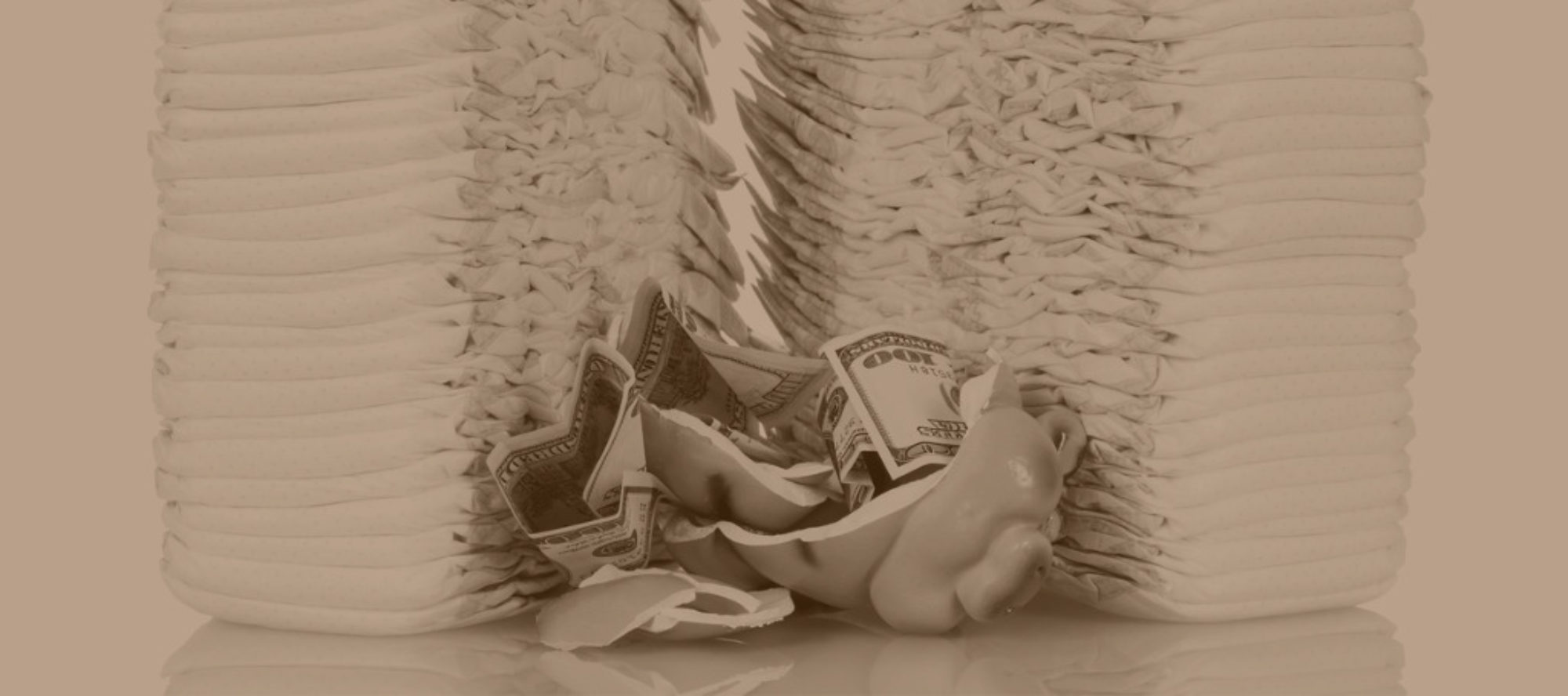

“The ecowelfare state should be a welfare state designed
for leaking bodies.”
The first research findings published
The Pad Project team has just published its fist research results, as part of a Special Issue that deals with the ecowelfare state.
The open access article is titles “Shadowing the shadows of the ecowelfare state: Listening to the adult incontinence
pads’ parlance in the Finnish welfare state”.
The article is written in Finnish, but you can find the English abstract below. (And perhaps a certain search engine’s translation tools cam help you read the contents, too, even if you do not read Finnish.
Abstract
Adult incontinence, both urinary and faecal, are common conditions. Incontinence, however,
and the pads utilised for its management, are silenced. Like waste in the welfare state, they
are in the shadows of wellbeing and overshadowed by it. Various behavioural norms make
them invisible and unspeakable: something that should not disturb the administrative order.
Pad waste is doubly in the shadows. The incontinence pads thus mark the most silenced
corners of the welfare state. When envisioning the ecowelfare state, mapping such silences
is vital. In an ecowelfare state, ecologically sustainable good life must be guaranteed for all
bodies, also those unable to control their bladder or bowels.
In this article, we explore
the administrative discourses and silences around incontinence pads. Methodologically, the
article combines multi-sited ethnography with feminist science and technology studies and
Derridean deconstruction, to sketch potential trajectories towards the ecowelfare state
from the viewpoint of incontinence.
Drawing on data on the municipal administration of the
Finnish pad economy, we show how the ecowelfare state should be a welfare state designed
for leaking bodies. This requires adequate continence care, cure, prevention and rehabilitation,
as well as water, sanitation and hygiene (WASH) infrastructures, which sewage systems alone
do not solve.
Keywords:
adult diaper, deconstruction, ecowelfare state, incontinence
